Resin 3D Printing by Truform
High-Precision Resin 3D Printing for Detailed Prototypes and Production
Truform provides industrial-grade resin 3D printing that delivers exceptional accuracy, smooth surfaces and fine feature resolution. Using SLA, DLP and MSLA systems, our expert teams produce prototypes and small functional parts with the precision required for professional applications.

What is Resin 3D Printing?
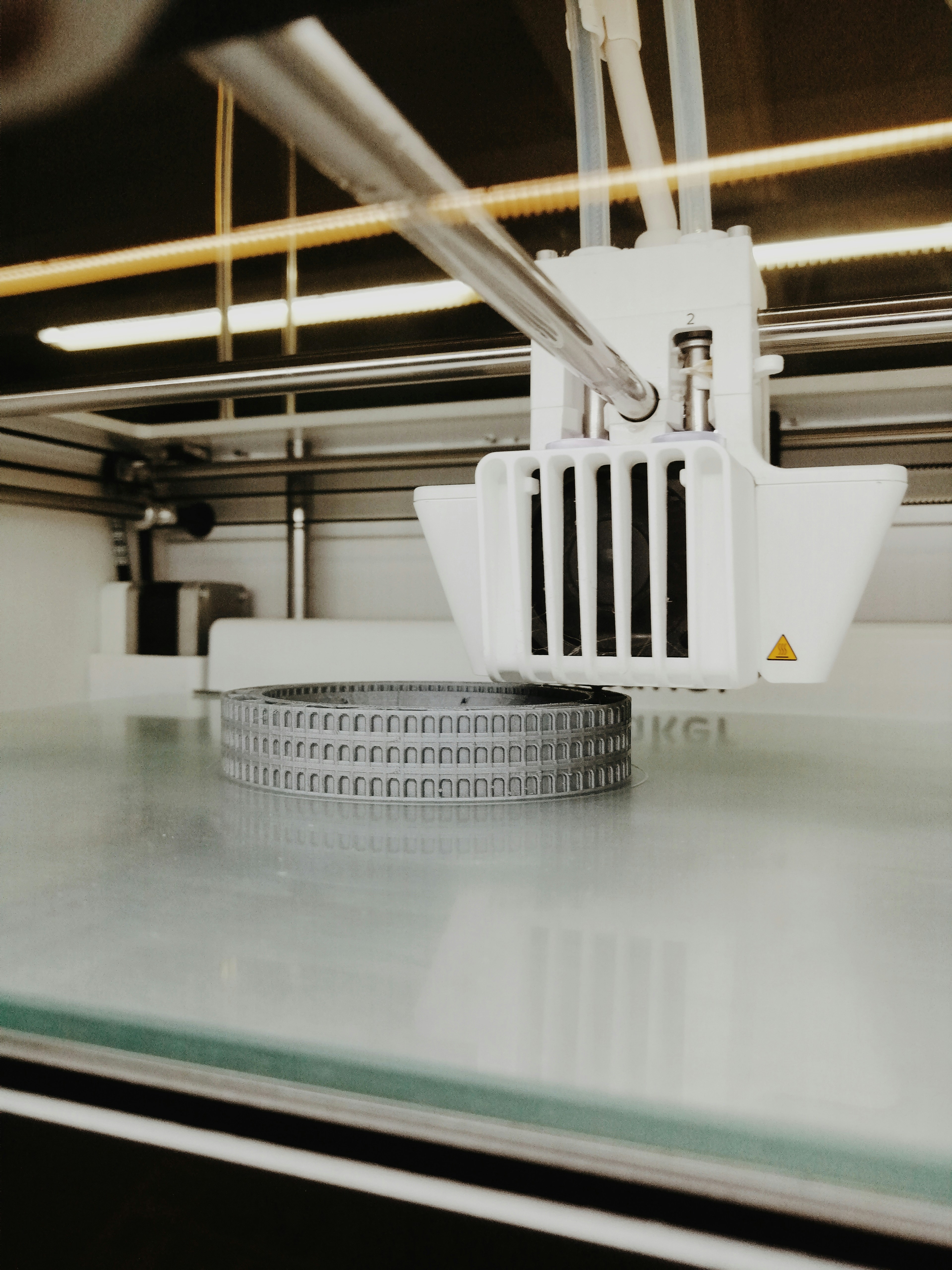
3D printing resin is a process that creates parts layer by layer using liquid photopolymer resin cured by targeted light. Instead of cutting or shaping solid material, the printer selectively hardens each layer with precision, enabling extremely fine details, smooth surfaces and complex geometries.
This approach is essential for industries that depend on accuracy and visual quality - from product design and engineering to dental, medical and creative applications. It enables faster iteration, cleaner aesthetics and high-resolution prototypes that closely replicate the final manufactured part.
Why 3D Print Resin?
3D printing resin is ideal when precision, detail and surface finish are critical. As a photopolymer-based process, the liquid resin consists of molecules that react to specific wavelengths of light, giving resin 3D printing its signature precision, smooth surfaces and the ability to capture intricate details. This makes it suitable for prototypes, small functional components and specialised applications. Key advantages include:

Exception Detail
Captures intricate features and complex geometries with high accuracy.

Smooth Surface Finish
Minimal layer lines reduce post-processing and achieve a professional aesthetic.

Versatile Materials
Resins are available with properties such as flexibility, toughness, transparency and heat resistance.

Rapid Prototyping
Layer-by-layer curing enables quick production of prototypes and small batches.

Customisable Parts
Ideal for dental models, jewellery and precision components.

Consistent Quality
Reliable photopolymer reaction ensures uniform curing and precise reproduction every time.

Types of Resin 3D Printing Technologies We Use
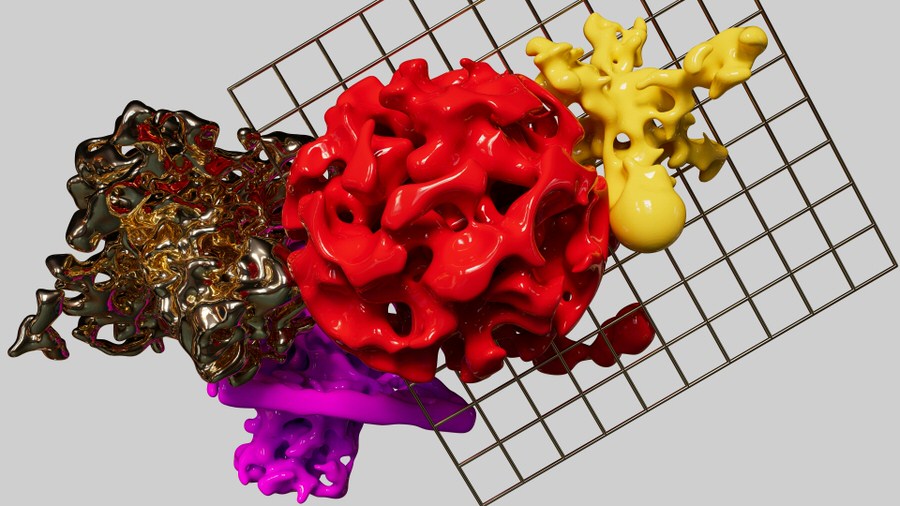
At Truform, we use advanced technologies like SLA, DLP and MSLA to achieve exceptional accuracy and surface finish for your resin 3D print. Each component undergoes careful post-processing and quality checks to ensure dimensional fidelity and consistent performance.
3D Print Resin vs Filament: Which is Right for You?
When deciding whether to 3D print filament vs resin, it’s important to consider the specific needs of your project. Both technologies have strengths and limitations, so it’s worth comparing key factors:
| Key Factors | Filament | Resin |
|---|---|---|
| Precision & Detail | Layer lines are more visible; better suited for larger, less detailed parts | Excellent for intricate designs, small features and smooth surfaces. Ideal for jewellery, dental models and miniatures |
| Material Properties | Common plastics like PLA, ABS, PETG and nylon provide toughness, durability, and impact resistance for functional parts | Offers a range of formulations, including flexible, tough and transparent options. Some specialised resins can match engineering-grade plastics |
| Size & Build Volume | Larger build volumes are easily achievable, making it suitable for bigger prototypes and functional components | Typically limited to smaller build volumes. Best for compact, high-detail parts |
| Post-Processing | Minimal post-processing; mostly sanding, gluing or painting if needed | Requires washing, curing and sometimes sanding but delivers smooth finishes |
| Cost & Speed | Generally cheaper and faster for bigger parts; cost-effective for prototyping or functional applications | More expensive per part and slower for large volumes, but provides superior surface finish and precision |
Precision & Detail
Filament
Layer lines are more visible; better suited for larger, less detailed parts
Resin
Excellent for intricate designs, small features and smooth surfaces. Ideal for jewellery, dental models and miniatures
Material Properties
Filament
Common plastics like PLA, ABS, PETG and nylon provide toughness, durability, and impact resistance for functional parts
Resin
Offers a range of formulations, including flexible, tough and transparent options. Some specialised resins can match engineering-grade plastics
Size & Build Volume
Filament
Larger build volumes are easily achievable, making it suitable for bigger prototypes and functional components
Resin
Typically limited to smaller build volumes. Best for compact, high-detail parts
Post-Processing
Filament
Minimal post-processing; mostly sanding, gluing or painting if needed
Resin
Requires washing, curing and sometimes sanding but delivers smooth finishes
Cost & Speed
Filament
Generally cheaper and faster for bigger parts; cost-effective for prototyping or functional applications
Resin
More expensive per part and slower for large volumes, but provides superior surface finish and precision
3D Resin Print Applications by Industry
Resin 3D printing enables precision, creativity and efficiency across a variety of sectors, including:

Healthcare
Dental models, surgical guides, prosthetics and custom medical devices

Jewellery
Intricate designs, casting patterns and one-off bespoke pieces

Consumer Products
Prototypes, figurines, miniatures and customised accessories

Engineering & Manufacturing
Small-scale functional components, jigs, fixtures and tooling for low-volume production

Education & Research
Anatomical models, scientific prototypes and educational aids
Truform’s Rapid Resin 3D Printing Service
At Truform, we don’t just print parts - we deliver production-ready resin components with exceptional detail, surface finish and reliability.
Our rapid 3d resin printing service in the UK supports both prototypes and small to medium production runs, combining precision, consistency and full traceability.
Why Choose Truform?

FAQs
What is resin dye for 3D printing?
Resin dye for 3D printing is a specially formulated pigment that can be added to liquid photopolymer resin to change the colour of your printed parts. It allows designers to create customised hues or match specific branding and aesthetic requirements.
Can I use any dye with 3D printing resin?
No, not all dyes are compatible. Only dyes specifically designed for photopolymer resins should be used, as other pigments may prevent proper curing or affect print quality.
What is 3D print resin casting?
3D print resin casting is a process where a 3D printed resin model is used as a master pattern to create a mould, which is then filled with another material - often metal, silicone or resin - to produce the final part. This technique combines the precision of resin 3D printing with the versatility of casting.
What is 3D print resin cure time?
Resin cure time refers to the period needed for a 3D printed resin part to fully harden and achieve its optimal mechanical properties after printing. This usually involves post-processing under UV light to complete polymerisation.
See What Your Project Could Cost
Whether you need intricate models, prototypes or precision components, we provide the speed, accuracy and expertise to bring your designs to life.