


Inventory management has always played a central role in manufacturing. It’s not just about keeping shelves stocked; it’s about balancing cost, risk, and availability in a way that supports the wider business.
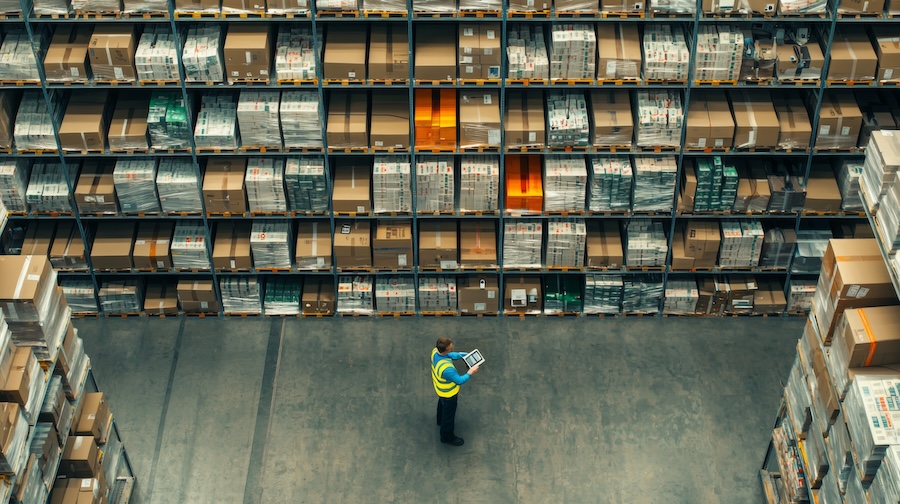
Traditionally, this has meant holding physical inventory in warehouses so it’s available when needed, reducing the risk of delays to the end customer. It’s a model that is widely understood and trusted. However, as manufacturing becomes more cost-sensitive and global supply chains grow more complex, many organisations are re-evaluating how they approach managing inventory.
Understanding Traditional Inventory Management
Traditional inventory management is a well-established process built on certainty. Put simply, if a component is in stock, it can be used immediately. This reliability is vital to many organisations, particularly where downtime is costly or not an option.
However, this approach comes with trade-offs:
- Physical inventory requires storage space and ongoing management
- Accurately forecasting demand can be challenging
- There are cost consequences to both excess stock and shortages
- Parts can become obsolete before they’re ever used
For example, a rarely used spare part may sit in storage for years, tying up capital, only to become obsolete before it is ever needed.
Traditional inventory management creates a constant tension between maintaining availability and controlling costs. Striking the right balance is essential, but not always straightforward, particularly as operational complexity increases.
How On-Demand Manufacturing Offers a Different Approach to Production
On-demand manufacturing approaches this challenge from a different angle. Instead of storing parts physically, it focuses on the ability to produce parts as and when they’re needed.
Advances in on-shore additive manufacturing make this possible without the need for tooling or large production runs. In many cases, components can be produced directly from digital files within days.
Rather than investing upfront in large quantities of parts, organisations only pay for what they produce. This can reduce waste, lower manufacturing cost, and free up capital, particularly for low-volume or unpredictable components.
Inventory Management vs On-Demand Production in Practice
When comparing inventory management with on-demand manufacturing, the differences become clearer when viewed through three practical lenses: cost, risk, and flexibility.
Cost
With traditional inventory, cost is largely committed upfront and continues through storage, handling, and excess stock. In contrast, on-demand manufacturing aligns cost more closely with actual usage, helping organisations better control manufacturing costs over time.
Risk
Physical inventory reduces the risk of immediate shortages but introduces the risk of overstocking and obsolescence. On-demand manufacturing removes those risks but places greater emphasis on production speed and supply reliability.
Flexibility
Physical inventory is limited to what has already been produced and stored. In contrast, on-demand manufacturing allows for changes in design, quantity, or specification without the same constraints.
In practice, the choice comes down to how your business balances cost, risk, and flexibility. The right approach will vary depending on part type, demand predictability, and how quickly you need to respond to change.
Digital Inventory as a Practical Middle Ground
For many organisations, moving from physical inventory to on-demand production can feel like a significant shift. In practice, an immediate transition isn’t always necessary or realistic.
Digital inventory offers a practical middle ground, allowing organisations to reduce physical stock without sacrificing availability.
Rather than storing parts in a warehouse, businesses store the digital files needed to produce them. These files effectively become inventory in their own right, allowing parts to be manufactured as required without holding physical stock.
This approach supports more efficient inventory control while reducing the costs associated with storage, handling, and excess inventory. It also allows organisations to adopt on-demand production in a measured way, building confidence before making broader changes.
The Role of Additive Manufacturing
Additive manufacturing underpins both digital inventory and on-demand production. By producing parts directly from digital files, it removes the need for tooling and enables flexible, low-volume manufacturing.
Across the UK, manufacturers are already adopting digital inventory and additive manufacturing approaches to improve agility, reduce lead times, and build more resilient supply chains. This shift is already shaping modern manufacturing for the better.
Finding the Right Balance for Your Organisation
For most organisations, the choice between inventory and on-demand manufacturing is not a simple either-or decision. The real value lies in finding the right balance between the two.
A hybrid approach is often the most practical. High-volume, predictable components may still justify physical inventory, while low-volume or less predictable parts can be produced on demand from digital files.
This combination allows businesses to reduce unnecessary stock, improve how they manage inventory, control manufacturing cost, and increase flexibility without disrupting existing operations. Rather than replacing traditional systems entirely, digital and on-demand approaches provide a more strategic and efficient way to manage inventory.