


Supply chain disruption isn't a headline anymore. It's a cost that rarely shows up clearly, but quietly erodes margins over time. For any business sourcing parts or materials from overseas, the quoted price rarely tells the full story. Shipping volatility, warehouse overheads, varied quality, and customs delays don't appear on the invoice, but they do show up in the margins.
Here’s where those costs are really coming from, and why more manufacturers are starting to rethink the model.
Supply Chain Disruption Costs That Don’t Appear on the Invoice
The most damaging costs of overseas manufacturing are the ones businesses absorb without even realising. They're spread across departments, buried in overheads, and are easy to dismiss as "just the way it is in the industry." But global supply chain disruption has made them impossible to ignore.
Shipping and Logistics
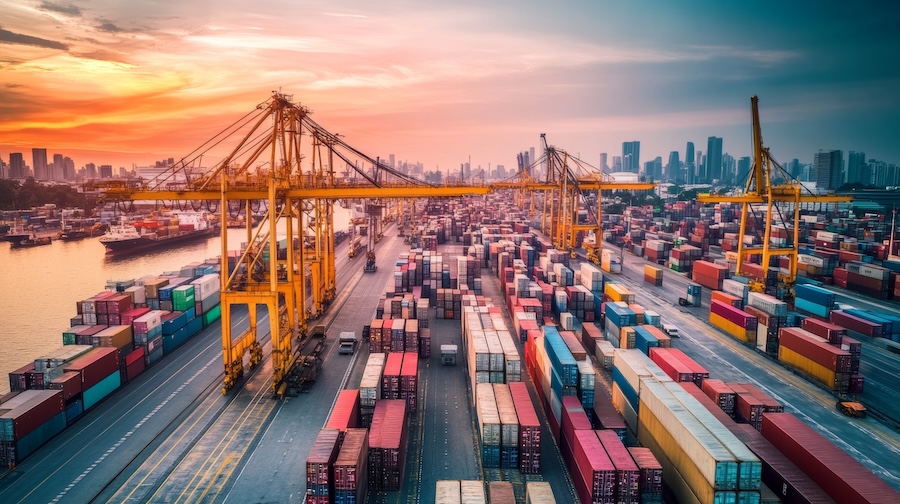
Transoceanic shipping costs have risen dramatically in recent years. While rates have fluctuated, the instability hasn’t gone away. Port delays and customs fees add up quickly. For UK manufacturers, post-Brexit processes have added another layer of friction; additional declarations, border checks, and unpredictable processing times that didn't exist a few years ago.
Every delay at the border adds an additional cost that directly impacts the business. A shipment held for even a few days doesn’t just affect freight costs; it can delay production schedules, push back customer deliveries, and create knock-on costs across the operation.
Quality Variance
When a production floor is on the other side of the world, direct oversight isn't always possible. Industry research suggests that the cost of poor quality often reaches around 15-20% of total sales revenue once rework, replacement shipments, delays, and lost sales are factored in. A part that arrives out of spec doesn't just need replacing - it holds up everything downstream. The production run planned around that delivery date slips, meaning the customer deadline tied to it slips too.
Inventory Bloat
Long lead times carry their own kind of cost. But what does that really mean for your business?
When a business is waiting six to eight months for a shipment, it orders more than it needs to buffer against uncertainty. That means capital is locked up in warehouses and stockpiled components risk becoming obsolete before they're used. Procurement teams overorder because the alternative is running out, then absorb the carrying costs because they have no other option.
Downtime
If a critical part is stuck in transit, a component gets delayed at customs, or a replacement won't arrive for weeks, the production line simply stops. Production downtime costs mount by the hour as knock-on delays occur across the operation. These supply chain disruptions cause unpredictable costs that operations managers are all too familiar with.
For more on how on-demand 3D printing reduces downtime, our dedicated article explores the operational side in more detail.
Why Supply Chain Disruptions Are Getting Worse, Not Better
A McKinsey survey in 2025 found that the majority of companies still only understand their supply chain risks up to tier one (their direct suppliers). Beyond that, visibility drops sharply. Most businesses don't know where their suppliers source from, meaning it’s impossible to know what risks sit further along the chain.
Meanwhile, the landscape continues to change. Geopolitical instability, trade tariffs, and strained global logistics networks mean overseas supply chain disruptions haven't been resolved - they've compounded. Sourcing strategies can’t keep up with ever-changing tariff regimes, and shipping routes that were dependable five years ago now carry political and logistical baggage. Every new layer of complexity makes the system more brittle.
Building supply chain resilience isn't optional anymore; it's the difference between absorbing the next disruption and being derailed by it.
What a Shorter, Smarter Supply Chain Looks Like
Across industries, manufacturers are rethinking how and where they produce. Reshoring and nearshoring are accelerating, and at the centre of that shift is additive manufacturing.
From Bulk Ordering to On-Demand Production
On-demand manufacturing through 3D printing changes the chain completely. Instead of ordering thousands of parts months in advance from overseas, manufacturers can produce exactly what’s needed, when it’s needed, much closer to where it’s needed.
Removing the Hidden Costs
Many of the most disruptive costs of overseas production are reduced or removed in this model. Shipping complexity becomes minimal when production is local. Excess inventory disappears when parts exist in a digital inventory and can be printed on demand rather than stockpiled in a warehouse. Quality variance drops when the manufacturers are accessible, and downtime shrinks from weeks to days, or even hours.
The Direction Manufacturing is Moving
These additive manufacturing benefits are driving a shift away from traditional overseas sourcing. Manufacturers are moving towards local, on-demand production supported by digital inventories and shorter supply chains.
The traditional model has proven too fragile and expensive to sustain. In its place, companies are adopting additive manufacturing supply chains that prioritise regional production, reduce lead times, and produce less waste.
Rethinking the Real Cost of Supply Chain Disruptions
The real cost of overseas manufacturing is in the delays, the rework, the overstocked warehouse, and the production line waiting on a part that’s stuck in transit. These costs are structural, and they won’t go down by switching to a slightly cheaper overseas supplier.
The technology exists. The infrastructure is maturing. And for many, the shift toward shorter, smarter, local supply chains is already underway.