
How Precision Machining Cut a Critical Gear Lead Time from Ten Weeks to Three
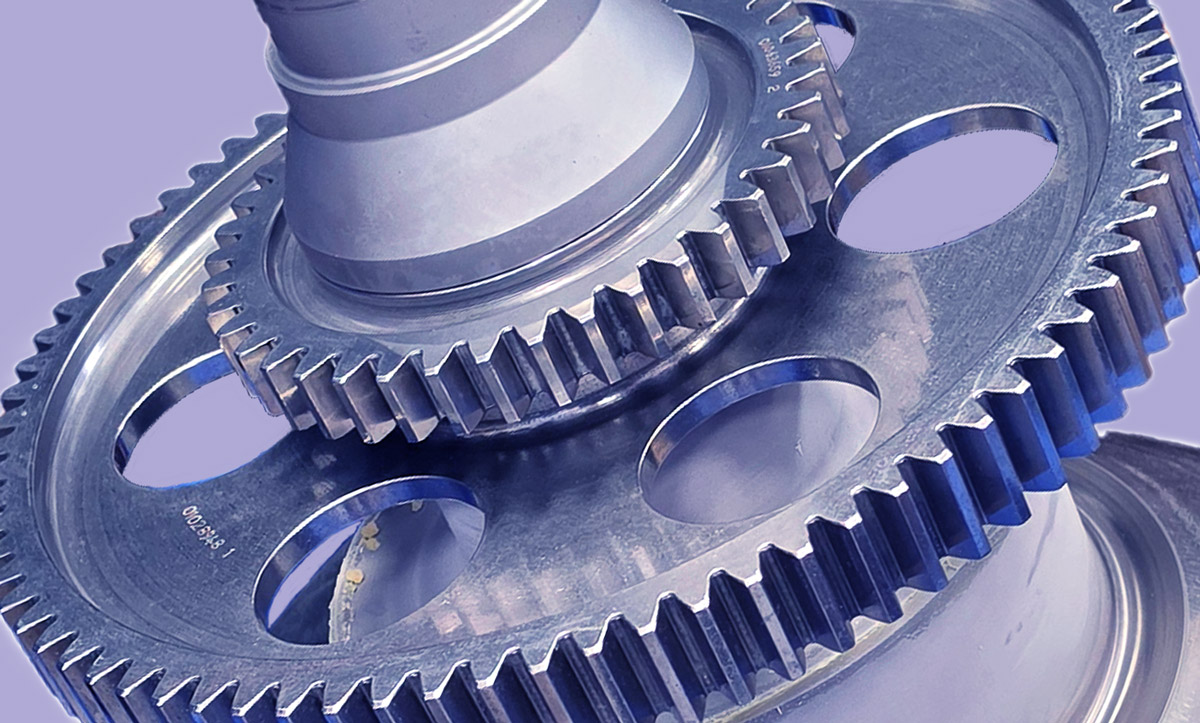
Two specialist gear components sat on the critical path of a multi-million-pound engineering programme at a global engineering firm, and the usual way of making them carried a ten-week lead time. At that scale, every week the gears were outstanding held up the work waiting behind them.
The firm brought the requirement to Truform: produce both gears to full specification, and find a quicker way to get there without putting the programme at risk.
This case study covers how the manufacturing decision was made, and how the components were delivered in three weeks instead of ten.

Deciding How to Make the Gears
Within days of receiving the CAD data and drawings, Truform had worked through the full picture: the tolerances the gears had to hold, the heat treatment and finishing they needed, the delivery risk, and the practical options for making them.
Conventional precision machining was the strongest answer here, given the tolerances and the timeframe. Additive manufacturing was on the table. It didn't make the cut.
The decision came from the requirement, not from a preference for any one technology. Truform works across both conventional and additive manufacturing, so the choice could be made on what the parts actually needed.

The Programme Behind the Gear
The customer is a global engineering firm working across the automotive, energy, rail and industrial sectors.
The two gears formed part of an engine programme heading for test, where the availability of these components had become a constraint on programme timing.
Shortening the Lead Time Without Compromising the Specification
Speed was the obvious requirement. The harder part was taking weeks out of the lead time without moving the risk somewhere else.
The specification still had to be met in full. The heat treatment, grinding, inspection and final quality all had to hold. A shorter lead time was only worth having if the gears arrived ready for the programme.
A Single Point of Contact for the Whole Job
With the approach agreed, Truform engaged its manufacturing network and took ownership of the work from there. Machining, heat treatment, grinding, inspection, and delivery were coordinated as a single job. Truform stayed accountable for each stage.
The client had one point of contact throughout. Their engineering and procurement teams stayed on the wider programme while Truform managed the components, the suppliers, and the schedule. There were no separate suppliers to chase and no manufacturing stages to coordinate from their side.

What mattered wasn't simply manufacturing the components. It was having a partner who could quickly assess the options, recommend the right approach, and take ownership of delivery from start to finish.
From Ten Weeks to Three
The components were delivered three weeks after the order was placed, against the original ten-week lead time. That is a 70% reduction, achieved on a live programme.
The earlier delivery kept the programme on schedule for test and took pressure off the wider team.
Key outcomes:
- Lead time reduced from ten weeks to three
- Critical programme timeline protected
- Manufacturing options assessed and the approach confirmed quickly
- A single point of accountability across the whole job
- Less load on the customer's engineering and procurement teams
- Components delivered to the required specification
The Requirement Drove the Decision, Not the Technology
Additive manufacturing was considered carefully here, and it was capable. It was set aside because conventional machining suited this job better, not because of any shortcoming.
That is the wider point. The strongest manufacturing decisions follow the requirement rather than the technology, which is only possible when more than one option is genuinely available.
Choosing the Right Process Matters
This project was not about having a clever answer ready. It was about reviewing the requirement properly, making the right manufacturing call quickly, and then carrying it out without drama.
That is the way Truform works as a manufacturing partner: the right engineering decision for the job, made early, and owned through to delivery.
Let’s Talk
If a manufacturing challenge is putting pressure on your programme, it’s probably worth a conversation.