Component Procurement, Made to Order
From replacement parts to obsolete and bespoke components
With the right part on hand when it is needed, production keeps moving. Truform helps keep critical components available by manufacturing replacements, bespoke, and obsolete parts when conventional supply routes are unavailable, impractical, or too slow.

What is Component Procurement?
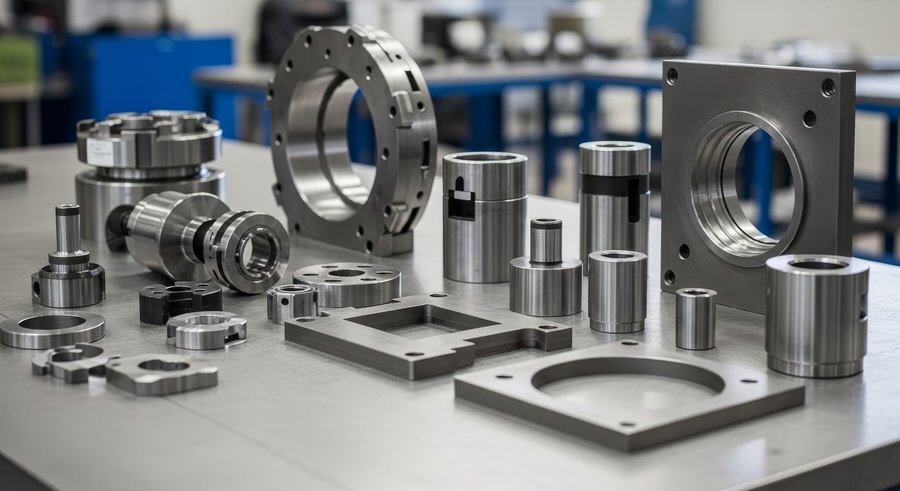
Component procurement is how a business keeps the parts it relies on available, even when the original supplier, the tooling, or the drawing no longer exists. It covers everyday replacement parts as readily as ones that have not been made in years.
At Truform, a component is reproduced from its design, recreated from the physical part, or manufactured new. Its availability no longer depends on whether anyone still supplies it.
How Each Component Is Made
When you bring a component to Truform, the decision of how to make it starts with the part. A part still in production is a different job from one that has not been made in twenty years.
Truform makes it the way that best fits the part, weighing what it has to do, how soon it is needed, and how accurately it must be made, rather than starting with a preferred manufacturing process. There are four main ways, each suited to a different job:
Digital Inventory
A stored design kept in digital inventory, so a proven part returns to supply without recreating drawings or tooling.
Reverse Engineering and 3D Scanning
Recovers a part that exists in hand but not on a drawing, using reverse engineering and 3D scanning to create the data needed to bring it back into supply.
Conventional Machining
High accuracy, surface finish, and material performance for demanding components and repeat production.
Additive Manufacturing
Complex geometries and on-demand production where traditional tooling is impractical or unnecessary.
Sourcing Replacement and Obsolete Parts
Truform reproduces a part from a drawing, a sample, or a scan. Reproducing it well comes down to two things: its shape and what it is made of. Take it from the wrong reference point, and the error is built in before machining starts. Match the shape but not the material, and the part can fit perfectly and still give way under load. Get both right, and the new part lasts as long as the one it replaced.
The parts Truform supplies this way fall into a few familiar types:
Replacement Components
Like-for-like parts reproduced to the original fit, form, and function.
Obsolete and Legacy Parts
Discontinued parts recovered and remade, so older equipment remains running.
Custom and Bespoke Parts
One-off and specified parts made to a drawing or a sample.
Production Runs
Repeat parts supplied to a consistent standard across a batch.
Who We Work With
Component needs look different across industries, and so does the way each part is best made.
In most cases, Truform supplies parts across four sectors:

Industrial Components
Replacement and production parts for valves, housings, and precision industrial components.

Automotive and Aftermarket
Parts for production vehicles, motorsport, and automotive aftermarket and restoration.

Manufacturing and Fabrication
Components and wear parts that keep fabricated and machined production supplied at volume.

Product Design and Development
Bridge and pre-production parts that keep a design moving toward launch.
Why Choose Truform for Component Procurement?
Truform brings together the manufacturing capabilities a part needs, so the part decides how it is made, not the other way round.
What that brings together:

Procurement does not stop at one order. As a part is revised, superseded, or discontinued, Truform helps keep it available, so a proven part is never one a business has to source from scratch again.
FAQs
What does component procurement at Truform cover?
It covers the parts a business depends on: replacement parts, production parts, custom work, and parts that are no longer available. Each one is reproduced from a design, a sample, or a scan, then made the way that suits it.
Can Truform supply discontinued parts, or parts with no drawing?
Yes. A part with no drawing is recovered through reverse engineering and, where appropriate, by 3D scanning, then reproduced or improved. Discontinued and legacy parts are matched to the original duty, so equipment stays in service long after the original supply has ended.
How quickly can urgent parts be supplied?
It depends on the part, its requirements, and the manufacturing route selected. Where lead time is critical, Truform will recommend the fastest practical route while maintaining the required performance and quality. A design already held in digital inventory is often the quickest to bring back into supply.
Can Truform reproduce a part from a worn or damaged sample?
In many cases, a physical sample is enough. Truform can reverse engineer the part using measurement and 3D scanning, where appropriate, to recover the information needed to reproduce the part.
Bring Truform the Component You Need
From a single replacement part to ongoing supply, send us the part, a drawing, or a sample, and tell us what it needs to do. We’ll recommend the best way to make it, produce it to spec, and keep it available for next time.