Reverse Engineering That Makes the Part Again
From worn and obsolete parts to components with no drawing
A part that is no longer made can still be reproduced from the part in hand, keeping the equipment or production that depends on it running. Truform reverse engineers obsolete, undocumented, and worn components so they can be manufactured again without relying on the original drawing or original supplier.

What is Reverse Engineering?
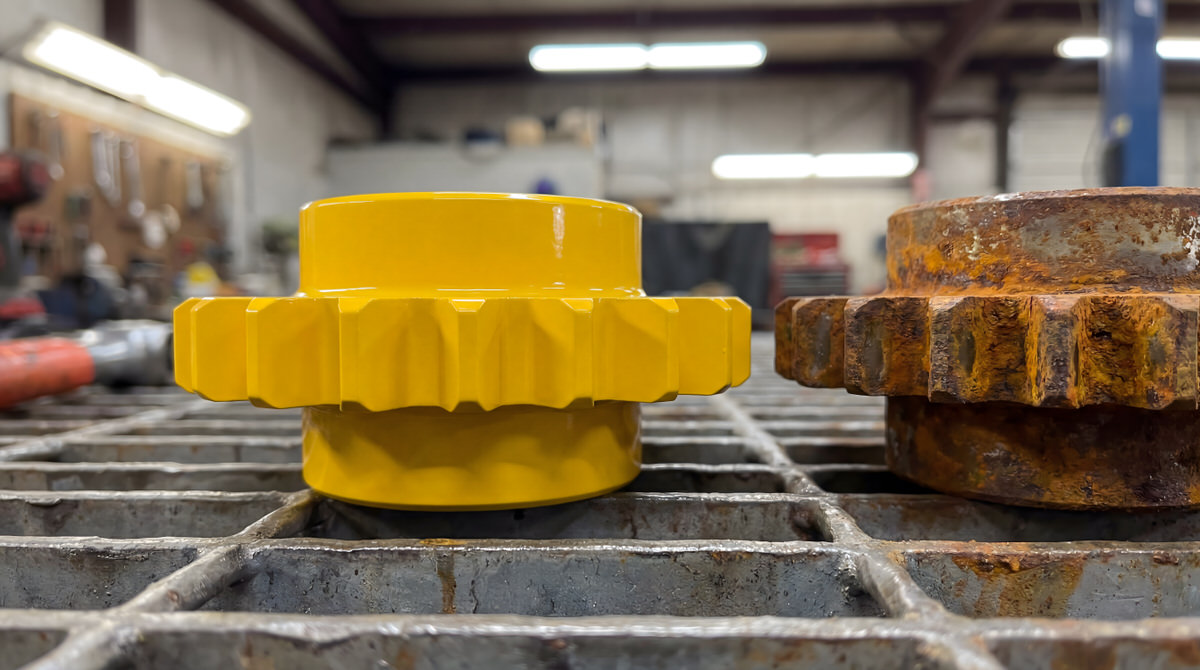
Reverse engineering is how an existing part becomes something that can be made again. It works back from the physical part to the information needed to reproduce it: its geometry, its dimensions, and the material it is made from.
It is most often needed when a part can no longer be sourced, the original supplier has disappeared, or the drawing was never kept. Sometimes equipment has been modified over many years, and the documentation no longer reflects what is actually in service. Whatever the reason, the part in hand becomes the reference, and the information needed to remake it is recovered from there.
How a Part Is Recovered
When a replacement part is needed but no drawing exists, the work starts by capturing exactly what the part is, most often through 3D scanning and hand measurement. A simple bracket and a precision gear are different jobs, each measured and modelled to the accuracy its replacement depends on.
Recovering a part well depends on where its true shape is taken from. Scan a worn part and copy it as it stands, and the replacement carries the same wear that made the original fail. Rebuild to the shape the part had when new instead, and it comes back performing the way it did then.
What governs the work is the part’s geometry, the material it is made from, how accurately it has to match, and how quickly a replacement is needed.
Bringing a part back draws on several techniques, from capturing the part to making it again:
3D Scanning
Captures the full geometry of a part or surface, including features too fine to measure by hand.
Measurement and Inspection
Hand measurement and inspection confirm dimensions and tolerances a scan alone cannot judge.
Conventional Machining
Suitable for parts that require tight tolerances, specific materials, or proven manufacturing methods.
Additive Manufacturing
Useful for complex geometries, low-volume requirements, and parts where traditional tooling would add unnecessary cost or lead time.
Common Reasons Customers Need Reverse Engineering
Most reverse engineering projects fall into a few familiar categories:
Obsolete and Legacy Parts
Discontinued parts recovered and remade so older equipment stays in service.
Worn or Damaged Parts
Failed parts rebuilt to their original duty, not to the worn shape they arrived in.
Parts Without Drawings
Components still in use where no usable drawing or CAD data remains, captured from the part itself.
One-Off and Replacement Parts
Single parts and small runs are remade to the original fit, form, and function when conventional supply is unavailable.
Who We Work With
Truform reverse engineers parts across a wide range of industries, with each sector presenting its own challenges.

Industrial Components
Obsolete valves, housings, and precision industrial components recovered when no drawing remains.

Automotive and Aftermarket
Discontinued and classic automotive parts remade for restoration, motorsport, and low-volume runs.

Manufacturing and Fabrication
Worn or undocumented parts on fabricated and machined production lines, captured and remade.

Product Design and Development
Existing parts captured into a design that can be iterated and documented.
Why Choose Truform for Reverse Engineering?
Truform makes the part it recovers, not just a record of it. That is why a recovered part is remade and put back to work, rather than handed over as a model and left there.
What that brings together:

Reverse engineering does not stop at the first replacement. Once a part has been recovered and documented, future replacements can be manufactured without repeating the reverse engineering process, keeping proven components only one order away.
FAQs
What does Truform’s reverse engineering service cover?
Truform reverse engineers parts when drawings, CAD files, or original suppliers are no longer available. Typical projects include obsolete components, worn parts, legacy equipment, and one-off replacement parts.
Can a worn or damaged part still be reproduced?
Yes. A worn or broken part is enough to start, with no drawing or model needed. It is captured by 3D scanning and measurement, then reproduced to its original specification.
Does Truform supply the recovered design data, or only the finished part?
Truform reverse engineers parts in order to manufacture them, so the standard output is the finished component rather than a CAD model alone. Where recovered data is required, that can also be provided.
How is the cost of reverse engineering worked out?
It depends on the part size, condition, and manufacturing route. Where several production options are available, Truform will recommend the most practical and cost-effective solution for the application.
Can Truform work from a single sample part?
Yes. In many cases, a single sample part is enough to begin. Truform can recover the geometry from the component itself and reproduce it, even where no drawing, CAD file, or original supplier information exists.
Keep Critical Parts Available
From a single part to ongoing supply, send us the part with any drawing or sample you have, and tell us what it must do. Truform will recover the part, reproduce it to its original duty, and keep the design on file so the next one is a reorder, not a hunt for a supplier.