How Additive Manufacturing Cut a Production Tool’s Lead Time from Six Weeks to Days
A hand-operated production tool was costing a UK engineering and technology company around £4,000 a unit, with a lead time of roughly six weeks. By looking past the approach the customer first had in mind, Truform developed an alternative that could be made in a matter of days, at more than 80% lower unit cost.
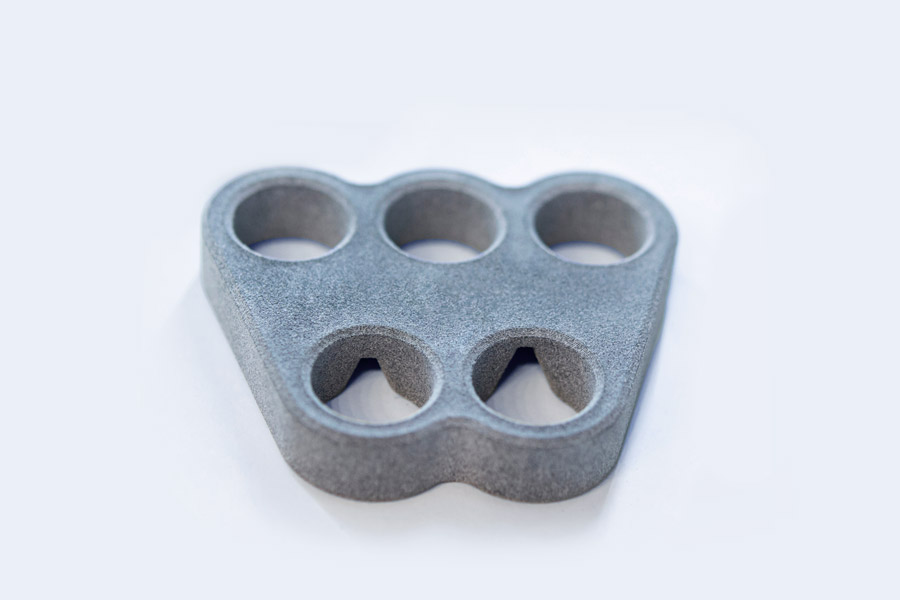
The first tool didn't quite work. It held components in place but didn't grip them tightly enough to keep them there. Rather than just switch to another printing process, Truform asked what was causing the problem: the material, the process, or the design.
The answer was the design. And the solution was a change to the geometry that played to the strengths of MJF PA12. A revised tool was back in the operator's hands soon after, and this time it held.

A Problem to Solve, Not a Process to Buy
The customer already knew Truform from previous manufacturing projects. One of its engineers brought in a hand-operated tool used to locate and grip circular components during an operational process.
They had already tested part of the concept on an in-house FDM printer, and their own research had pointed towards resin 3D printing. Rather than being sold a particular 3D printing process, they wanted help working out the best way to make the tool.

Where Tooling Plays a Part
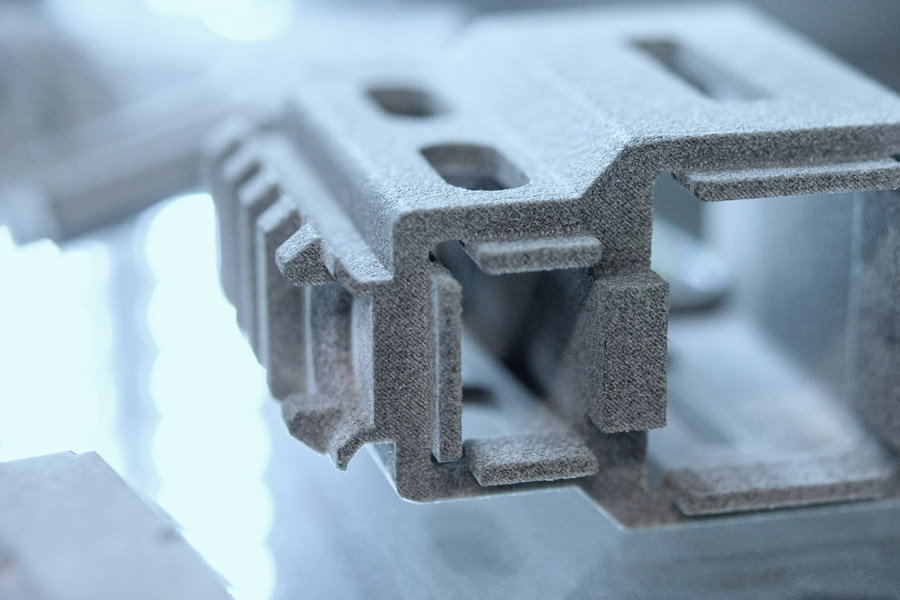
The customer is a UK engineering and technology company developing advanced products and systems for demanding applications. Its engineering teams take products through development and into operation, where manufacturing and tooling play a real part.
Cutting Cost and Lead Time Without Losing Performance
The existing tool was machined from plastic. Used by hand, it had to locate the components accurately, grip them securely, and be practical to handle. It did all three, but at around £4,000 and a six-week lead time every time one was needed.
The problem was as much commercial as engineering: make the tool faster and cheaper without losing any of what it had to do.
Choosing the Process Around the Application
FDM had already proved the concept, and resin offered stiffness and dimensional capability. PolyJet was another candidate. The strongest all-round option was Multi Jet Fusion in PA12, which brought toughness, useful compliance, speed, and strong economics. Truform isn’t tied to one manufacturing technology, so we could weigh each process against the application rather than make the application fit a process.
The tool was manufactured quickly. The components located correctly and the material behaved well, but the grip wasn’t quite strong enough, and under movement the tool could release the components. Rather than treat that as a failed part, Truform used it as something to work from.
A stiffer resin came back into consideration. The alternative was to keep the toughness and compliance of PA12 and change the geometry instead, creating a more positive grip. The customer developed the design in that direction, with Truform providing practical Design for Additive Manufacturing guidance, including where the customer's experience of FDM build orientation did, and did not, translate to MJF.
Within days of receiving the revised design, the second tool was back with the operator. As it moved over the circular components, the PA12 gripping features flexed, caught the engagement point, and snapped into place.

Truform helped us explore the options and find a better way to manufacture the tool. Their understanding of the different processes and materials was really useful as we refined the design. We ended up with a tool that works as intended, manufactured in days rather than weeks, at a fraction of the original cost. We’ve since ordered more.
From Six Weeks to Days
The reworked approach brought the lead time down from roughly six weeks to a matter of days, and reduced unit cost by more than 80%.
The customer could also test a physical tool, learn from it, and move quickly into the next iteration. Once proven, the same approach also gave them a practical way to make additional or replacement tools when needed.
The approach has since earned repeat business, with the customer coming back for four more of the revised tool.
Key outcomes:
- Lead time cut from roughly six weeks to a matter of days
- More than 80% lower unit cost than the machined original
- A working tool proven and improved across two quick iterations
- A repeatable way to make further or replacement tools once the design was settled
- Design for Additive Manufacturing guidance that carried the customer's FDM experience across to MJF
Learning from the First Tool
This project wasn’t about proving one 3D printing technology was better than another. It came down to understanding the application well enough to choose the right combination of material, process, and design.
The real value became clear when the first tool came back gripping too loosely. Nothing was locked in, so that result fed straight into a better second one.
Test, Improve & Move Fast
For low-volume tooling, the value of additive manufacturing isn’t just a cheaper final part. It also makes the first tool affordable enough to test and improve, rather than having to get it right in one go.
That’s the way Truform works: choose the approach the application calls for, treat the first result as something to learn from, and quickly move to a better one.
Let’s Talk
If a tool or a part is costing more and taking longer than it should, it's worth a conversation.