Deep Hole Drilling Services for Accurate Bores
Gun drilling, BTA, and deep hole boring in metals and plastics
A deep bore runs deep into a part and has to stay straight and on size down its full depth, whether it passes right through a shaft, stops as a blind hole, or carries coolant and fluid through a cylinder or manifold. Truform coordinates the drilling through an accredited specialist and owns the job from drawing to delivered bore.
Components We Drill
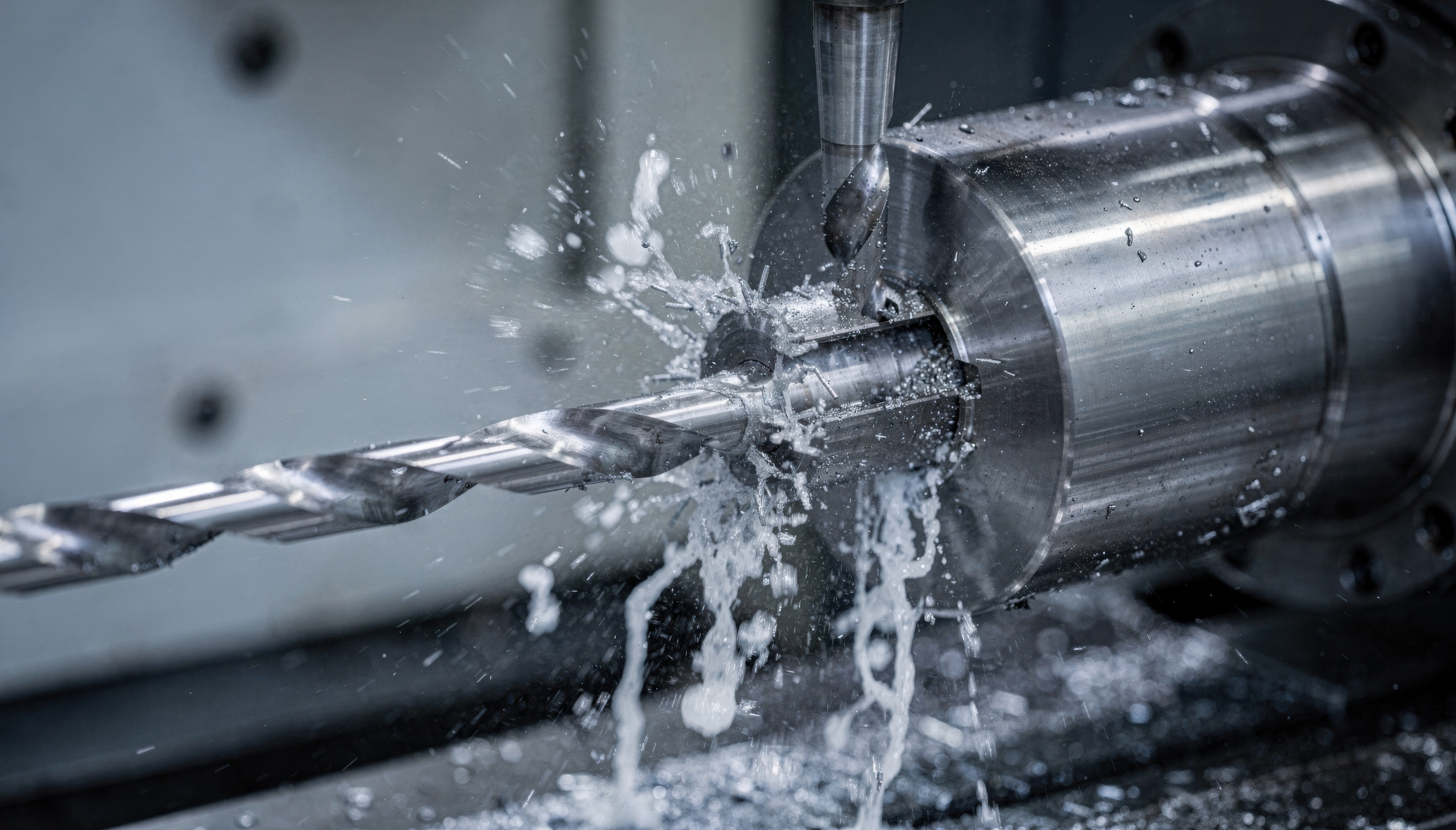
Deep hole drilling suits components built around a long, accurate internal bore:
Shafts and Rotors
Hollow drive, pump, and turbine shafts, bored to carry coolant or save weight.
Hydraulic Cylinders and Manifolds
Cylinder barrels and manifold blocks with long bores and intersecting fluid passages.
Valve and Pump Components
Valve bodies, pump shafts, plungers and pressure-control components requiring accurate internal bores and fluid passages.
Aerospace Cylinders
Landing gear and actuator cylinders bored to tight straightness in high-strength alloys.
Oil and Gas Components
Downhole tool bodies and pressure housings bored in Inconel, duplex, and other specialist alloys.
Mould-Tool Cooling Channels
Straight cooling holes drilled through tool-steel mould blocks to carry heat away from the cavity.
A deep bore is judged on how straight and concentric it stays over its length, not just its diameter. Let the drill wander off-axis and the bore comes out with uneven wall thickness or breaks into a feature it should have missed, scrapping the part late, when most of the machining is already done. Match the process to the depth-to-diameter ratio and control the run-out as it goes, and the bore holds true.

Deep Hole Drilling Capability
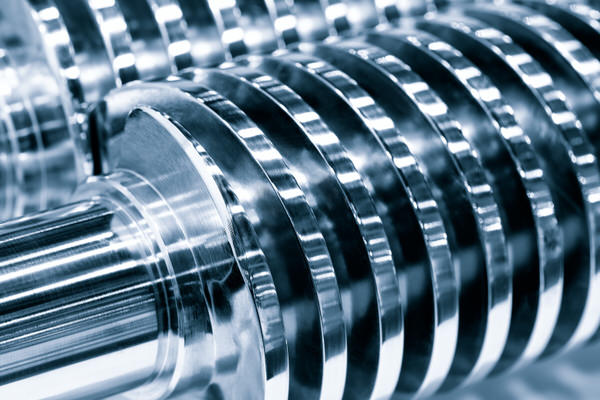
Truform takes on bores and parts in these ranges:
- Gun drilling: Ø0.8 to 24 mm
- BTA drilling: Ø24 to 210 mm
- Drilling depth: up to 3,000 mm from one end, or 6,000 mm from both ends
- Maximum component diameter: Ø750 mm
- Maximum component length: 6,000 mm
- Maximum component weight: 5 tonnes
These are application-dependent limits, confirmed for each job against the drawing. Achievable straightness depends on the part, and bore truing is available where closer straightness is needed.
Who We Work With
Truform drills for manufacturers and OEMs across several sectors:

Industrial Components
Bored valve, pump, and pressure bodies for hydraulics, oil and gas, and other industrial components, run in repeat batches.

Automotive and Aftermarket
Hollow transmission and motorsport shafts for automotive and aftermarket work.

Manufacturing and Fabrication
Cooling channels and precision tooling bored to keep fabricated and machined work running.

Product Design and Development
Bored prototypes and test parts that move with a design toward production.

Why Choose Truform for Deep Hole Drilling?
Truform takes on as much of the part as the job needs: specialist drilling of a free-issue component, or the complete part managed from material procurement through to CNC machining, drilling, finishing and inspection. The whole requirement runs through one point of accountability, from enquiry to delivery.
What that brings together:

Deep hole drilling doesn’t stop at the first order. Shafts wear and cylinders are reordered, and with the drawing already on file, Truform can put the part back into production quickly.
What is Deep Hole Drilling?
Deep hole drilling produces holes far deeper than ordinary drilling can reach, where the length of the bore is many times its diameter. Once a hole passes roughly ten times its diameter, coolant has to reach the cutting tip and carry the chips back out of a long, narrow bore.
Two processes do most of this work: gun drilling for smaller diameters, and BTA for larger bores and faster cutting. Depending on the application, additional boring or honing operations may be used to achieve the required dimensions, geometry and surface finish.
How a Deep Bore Is Made
When a bore requirement comes to Truform, the first step is reading what the hole has to do. Its diameter, how deep it runs against that, the straightness it must hold, and the material it passes through, all decide how it’s made.
Most jobs start with a drawing. If there’s only a worn or damaged part, Truform can recover the dimensions by reverse engineering first, and CNC machining handles the features around the bore.
Gun Drilling
Gun drilling uses a single-flute tool fed with high-pressure coolant through its centre, flushing the chips out along a V-groove. It holds a straight, accurate bore at smaller diameters, deep into the part.
BTA Drilling
Coolant fed around the tool and the chips flushed back out through its centre, for larger bores and tougher alloys.
Deep Hole Boring
Enlarging an existing bore to achieve the required diameter and geometry, including applications where the final bore is too large or demanding to produce in a single drilling operation.
Honing
Where required, honing refines the bore’s diameter, geometry and surface finish, particularly for components requiring close-fitting or sliding surfaces.
FAQs
What materials can Truform deep hole drill?
Most engineering metals, and some plastics. Steels and stainless through to specialist alloys such as Inconel, titanium, and duplex, plus engineering plastics. The grade is needed in the drawing as it drives the cutting parameters.
What size and depth of bore can Truform produce?
Bore size and depth depend on the part. With the diameter, depth, and material in hand, Truform confirms whether a bore is in range and how it will be drilled.
How is a deep bore kept straight?
A deep bore is kept straight by piloting the start, keeping run-out in check as it’s drilled, then verifying it on inspection before the part ships.
What if there’s no drawing, only a worn part?
A physical sample can provide a starting point. Truform can assess the component and determine whether its dimensions and features can be recovered through reverse engineering.
What does deep hole drilling cost?
Deep hole drilling is priced per job, from the drawing. Cost follows the engineering required: the diameter, depth, material, straightness, and quantity.
Do you supply material certification and traceability?
Yes, where the job requires it. Parts are drilled under the manufacturing partner’s AS9100 and ISO 9001 quality system, so material traceability and inspection records can be supplied to the drawing’s requirements. Specific scheme approvals are confirmed per project.
Send Us a Bore to Drill
From a single prototype bore to a production run, send us the drawing for complete manufacture or a free-issue part for drilling, with the diameter, depth, and material. Truform works out how it’s made, coordinates the work, and delivers the finished part.